If you’re searching for practical ways to elevate your cooking, you’re in the right place. This article is designed to give you clear, actionable guidance that strengthens your foundations in the kitchen—whether you’re refining everyday meals or exploring new global flavors. We focus on techniques that actually make a difference, from mastering heat control to prepping ingredients efficiently with essential tools like a chef’s knife, cutting board, and cast-iron skillet.
Rather than offering vague tips, we break down why each method works and how you can apply it immediately. Our approach is rooted in tested culinary techniques, hands-on kitchen experience, and a deep understanding of flavor development across cuisines.
By the end, you’ll not only know what to do—you’ll understand why it works, giving you the confidence to cook smarter, faster, and with more creativity every time you step into your kitchen.
Building Your Essential Kitchen Toolkit
To maximize the benefits of these essential kitchen tools, be sure to check out our article on ‘Food Tips Tbfoodcorner‘ for insights on how to make the most of your culinary investments.
A capable kitchen isn’t built on gimmicks; rather, it’s built on mastery of essential kitchen tools that earn their drawer space daily. While many guides list gadgets, few explain why versatility matters. For example, a chef’s knife—defined as an all-purpose, broad-bladed knife—handles chopping onions, slicing meat, and crushing garlic (yes, like a cooking show finale). Likewise, a heavy skillet distributes heat evenly, preventing hot spots that burn food.
Some argue specialty tools save time. However, multi-use staples reduce clutter and sharpen skill. Pro tip: invest in stainless steel for durability. Ultimately, fewer, better tools create calmer, smarter cooking.
The Foundation: Essential Tools for Preparation and Cutting
Build Your Core Kit Before You Build Your Menu
Most lists of essential kitchen tools stop at naming the basics. What they miss is why these specific tools outperform trendy gadgets crowding store shelves (looking at you, avocado slicer). If you want speed, control, and consistency, your foundation matters more than any recipe.
Chef’s Knife (8-inch): This is your workhorse. An 8-inch blade balances control and cutting power, letting you chop onions, slice proteins, and dice herbs without switching tools. A quality knife holds its edge longer and reduces wrist fatigue—because a dull blade is actually more dangerous due to slipping (CDC notes knife injuries are among the most common kitchen accidents). Pro tip: prioritize high-carbon stainless steel for durability and edge retention.
Paring Knife: Ideal for precision tasks like coring strawberries or trimming silver skin. Its small blade gives fingertip control that a chef’s knife simply can’t.
Serrated Knife: Bread and tomatoes demand a sawing motion, not pressure. Serrations grip delicate crusts and skins without crushing the soft interior.
Cutting Boards (2): Use one plastic board for raw meat (easy to sanitize) and another for produce. The USDA recommends strict separation to prevent cross-contamination.
Vegetable Peeler: A Y-peeler often removes skins in longer, smoother strokes than swivel models—especially for carrots and squash.
Kitchen Shears: Snip herbs, cut parchment, trim poultry, or slice pizza. Underestimated, overperforming (like the quiet MVP on a championship team).
Accuracy and Assembly: Utensils for Measuring and Mixing
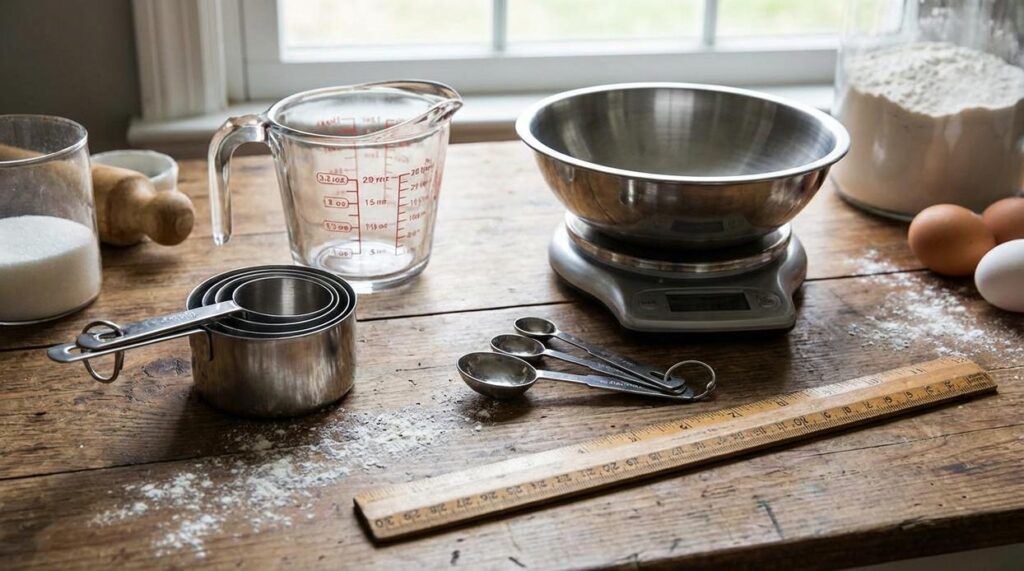
Great cooking starts with precision—and that’s where the right setup pays off. A nested set of mixing bowls (small, medium, large) gives you flexibility, whether you’re whisking pancake batter or tossing a crisp salad. Glass and stainless steel are especially durable, which means fewer replacements and more consistent results over time.
Next, measuring cups (dry and liquid) are not interchangeable. Dry cups are designed for leveling off flour or sugar, ensuring accuracy. Liquid cups, on the other hand, include a spout for controlled pouring. That small design difference prevents spills and keeps ratios exact—because even a little too much milk can change a recipe’s texture.
Equally important, measuring spoons (1/4 tsp to 1 tbsp) help you control flavor. Precision with salt or baking powder can mean the difference between balanced and overpowering.
Meanwhile, a balloon whisk aerates eggs and blends vinaigrettes smoothly, creating lighter textures. A silicone spatula ensures nothing goes to waste, folding delicate batters without deflating them. Finally, a colander handles draining, rinsing, and even quick sifting.
Altogether, these essential kitchen tools save time, reduce mistakes, and build confidence every time you cook.
Mastering the Stovetop: Tools for Sautéing, Frying, and Simmering
A confident cook starts with the right essential kitchen tools in the section once exactly as it is given—and knows how to use them well. Here’s how each stovetop staple earns its place.
Non-Stick Skillet (10-inch)
Your go-to for eggs, pancakes, and delicate fish. The slick coating prevents sticking and reduces the need for excess oil. But here’s the catch: metal utensils can scratch the surface, shortening the pan’s lifespan. Always use silicone, wooden, or heat-resistant tools (your future omelets will thank you).
Stainless Steel or Cast Iron Skillet (12-inch)
This is your workhorse. Perfect for searing meats and sautéing vegetables. Unlike non-stick, these pans excel at building a fond—the browned bits left behind after searing. Deglaze with broth or wine, and you’ve got a pan sauce packed with flavor. That deep brown crust? It’s the Maillard reaction, a chemical process that creates complex, savory notes (science never tasted so good).
Saucepan (2–3 quart)
Ideal for boiling grains or simmering sauces. A tight-fitting lid traps heat and moisture, speeding up cooking and preventing splatters.
Stockpot (6–8 quart)
Essential for soups, stocks, or pasta night. Its tall sides minimize boil-overs while allowing ingredients to circulate evenly.
Tongs
Think of them as an extension of your hand—safer for flipping proteins and tossing pasta.
Wooden or Heat-Resistant Spoons
Gentle on cookware and perfect for steady stirring.
Master these, and you’re ready for anything—from weeknight dinners to learning how to host a themed dinner night at home.
Beyond the Burner: Essentials for Baking and Roasting
Baking Sheets (2)—also called sheet pans—aren’t just for cookies. Choose rimmed versions to contain juices and you’ll unlock effortless roasted vegetables, crisp fries, and full sheet‑pan dinners with easy cleanup (weeknight win).
Roasting Pan or 9×13-inch Baking Dish handles chicken, casseroles, and brownies with equal ease. Glass or ceramic distributes heat evenly, giving you golden tops and tender centers—confidence you can taste.
Oven Mitts or Pot Holders are non‑negotiable for safe handling, preventing burns and kitchen mishaps.
Stock these essential kitchen tools and you’ll cook smarter, safer, and more deliciously every time.
With the right core utensils, your kitchen becomes a launchpad for any dish. Instead of second-guessing whether you own the right gadget, you can focus on flavor and technique. Start by checking off this simple list:
- A chef’s knife for slicing, dicing, and mincing
- A sturdy cutting board
- A skillet and saucepan
- A mixing bowl
- Measuring cups and spoons
These essential kitchen tools cover breakfast scrambles, weeknight pastas, and even ambitious dinner parties (yes, the kind that make you feel like a cooking show finalist).
Pro tip: choose quality over quantity. From there, fill gaps thoughtfully, and cook with confidence.
Bring Every Dish Together with Confidence
You came here looking for practical ways to elevate your cooking skills and make your time in the kitchen more rewarding. Now you have the foundations, techniques, and flavor insights to turn everyday meals into something memorable.
The biggest frustration in the kitchen isn’t effort — it’s uncertainty. Not knowing which flavors work, how to prep efficiently, or which tools truly matter can make cooking feel overwhelming. But with the right approach and a few essentials like a chef’s knife, cutting board, and cast iron skillet, you’re already equipped to cook smarter and with more confidence.
Now it’s your move. Put these techniques into practice, experiment with new global flavors, and refine your prep routine. If you’re ready to stop second-guessing your meals and start creating dishes you’re proud to serve, explore more expert-backed tips and kitchen-tested strategies today. Your next standout meal starts now.
 Kitchen Operations & Food Preparation Specialist
There is a specific skill involved in explaining something clearly — one that is completely separate from actually knowing the subject. Luther Deckeroids has both. They has spent years working with corner culinary techniques in a hands-on capacity, and an equal amount of time figuring out how to translate that experience into writing that people with different backgrounds can actually absorb and use.
Luther tends to approach complex subjects — Corner Culinary Techniques, Fresh Insights, Explore More being good examples — by starting with what the reader already knows, then building outward from there rather than dropping them in the deep end. It sounds like a small thing. In practice it makes a significant difference in whether someone finishes the article or abandons it halfway through. They is also good at knowing when to stop — a surprisingly underrated skill. Some writers bury useful information under so many caveats and qualifications that the point disappears. Luther knows where the point is and gets there without too many detours.
The practical effect of all this is that people who read Luther's work tend to come away actually capable of doing something with it. Not just vaguely informed — actually capable. For a writer working in corner culinary techniques, that is probably the best possible outcome, and it's the standard Luther holds they's own work to.
Kitchen Operations & Food Preparation Specialist
There is a specific skill involved in explaining something clearly — one that is completely separate from actually knowing the subject. Luther Deckeroids has both. They has spent years working with corner culinary techniques in a hands-on capacity, and an equal amount of time figuring out how to translate that experience into writing that people with different backgrounds can actually absorb and use.
Luther tends to approach complex subjects — Corner Culinary Techniques, Fresh Insights, Explore More being good examples — by starting with what the reader already knows, then building outward from there rather than dropping them in the deep end. It sounds like a small thing. In practice it makes a significant difference in whether someone finishes the article or abandons it halfway through. They is also good at knowing when to stop — a surprisingly underrated skill. Some writers bury useful information under so many caveats and qualifications that the point disappears. Luther knows where the point is and gets there without too many detours.
The practical effect of all this is that people who read Luther's work tend to come away actually capable of doing something with it. Not just vaguely informed — actually capable. For a writer working in corner culinary techniques, that is probably the best possible outcome, and it's the standard Luther holds they's own work to.