

If you’ve been searching for practical ways to feel calmer, more present, and emotionally balanced, exploring cooking for mental health might be exactly what you need. More than just preparing meals, cooking can become a grounding daily ritual—one that engages your senses, encourages mindfulness, and delivers a tangible sense of accomplishment.
In this article, you’ll discover how time in the kitchen can reduce stress, improve mood, and create meaningful moments of connection. We’ll explore the science-backed benefits of hands-on food preparation, simple recipes that support emotional well-being, and easy kitchen habits that make the process enjoyable rather than overwhelming.
Our insights draw from established research on mindfulness, nutrition, and behavioral wellness—combined with practical culinary techniques that make healthy cooking approachable for any skill level. Whether you’re a beginner or a seasoned home cook, you’ll find realistic, flavorful ways to turn everyday meals into powerful tools for mental clarity and calm.
The Brain-Gut Connection: Why Your Kitchen Is a Wellness Hub
Your gut isn’t just digesting lunch—it’s acting as a “second brain.” Scientists call this the gut-brain axis, the communication network linking your digestive system and brain. About 90% of serotonin, a neurotransmitter that stabilizes mood, is produced in the gut (Johns Hopkins Medicine). When your gut is off, your mood often follows (ever notice stress hitting your stomach first?).
Here’s my recommendation: take control through home cooking. When you cook from scratch, you choose fiber-rich vegetables, healthy fats, and fermented foods that nourish beneficial bacteria.
- Choose whole grains over refined carbs.
- Add leafy greens and legumes to reduce inflammation.
- Limit ultra-processed snacks linked to higher depression risk (BMJ, 2019).
Whole foods calm systemic inflammation, which researchers associate with mood disorders (Harvard Health). Processed foods can fuel it instead.
If you’re serious about cooking for mental health, start small: grow your own herbs. Learn how with how to start a home herb garden for fresh cooking. (Pro tip: Fresh basil beats bottled seasoning every time.)
Stock Your Pantry for a Brighter Mood
A few winters ago, I noticed my energy dipping right around 3 p.m. every day. I’d reach for coffee, then something sugary, and still feel foggy. Eventually, I started looking at my pantry instead of my calendar. What I found changed more than my snack routine.
First, omega-3 fatty acids—healthy fats that help build and maintain brain cell membranes. Think salmon, mackerel, walnuts, and chia seeds. Research suggests omega-3s may support mood regulation (Harvard Health Publishing). When I swapped afternoon chips for yogurt with chia seeds, my focus felt steadier (and yes, fewer crumbs on my keyboard).
Next came complex carbohydrates, which digest slowly and provide a steady release of glucose—your brain’s main fuel. Oats, quinoa, and sweet potatoes also help support serotonin production, a neurotransmitter tied to mood. After switching from white toast to oatmeal, my energy spikes leveled out. It wasn’t dramatic—more like upgrading from dial-up to decent Wi-Fi.
Then there’s the gut. Probiotics (beneficial bacteria in yogurt, kefir, kimchi) and prebiotics (fibers that feed them, found in garlic, onions, bananas) nourish the gut microbiome. Studies in Frontiers in Psychiatry link gut health and mood. Adding kefir smoothies felt small, but over time, my digestion—and mindset—improved.
Finally, essential micronutrients matter. Magnesium in dark leafy greens and almonds supports relaxation, while B vitamins in eggs and legumes aid energy and nerve function (NIH). When I began cooking for mental health, I wasn’t chasing perfection—just progress. Start with one shelf. Your brain, like any good recipe, thrives on the right ingredients.
Mindful Cooking: Techniques to Reduce Stress
Cooking doesn’t have to be another task on your to-do list. I recommend reframing it as a reset button.
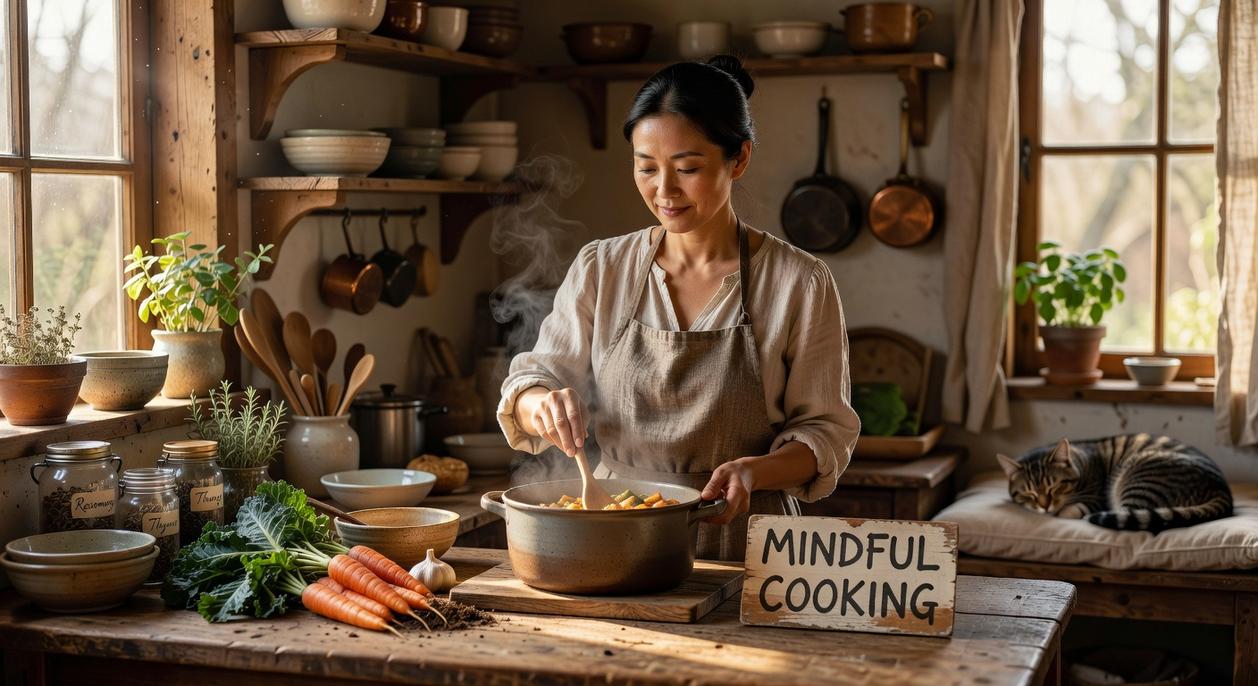
Start with the rhythm of prep work. The steady chop of a knife through carrots, the push and fold of kneading dough—these repetitive motions act like active meditation. Psychologists define mindfulness as paying attention to the present moment without judgment (American Psychological Association). Chopping an onion can do exactly that (yes, even if it makes you cry).
Next, engage all five senses. Notice the sizzle when garlic hits warm oil. Inhale the sharp brightness of fresh basil. Watch the deep reds and greens gather on your cutting board. This sensory grounding technique is often used to reduce anxiety because it anchors your thoughts in the now.
I strongly suggest embracing slow-and-low methods. Braising short ribs or simmering a stew forces patience. The gradual transformation—and the aroma filling your home—signals safety and comfort to your nervous system.
Finally, try batch-prepping on Sunday. Wash greens, chop onions, marinate proteins. When weeknights arrive, you’ll assemble instead of scramble. Think of it as cooking for mental health with a practical edge. Pro tip: keep prepped ingredients in clear containers so inspiration is visible (and stress stays low).
Three Simple Meals to Brighten Your Day
First, start strong with a Focus-Boosting Breakfast: the Omega Oatmeal Bowl. Rolled oats provide soluble fiber, which supports steady blood sugar and sustained energy (no mid-morning crash). Add walnuts and chia seeds for plant-based omega-3 fatty acids—linked to brain health according to Harvard Health Publishing—plus a handful of antioxidant-rich berries for natural sweetness. Stir, let it sit for five minutes, and breakfast is done. Pro tip: toast the walnuts briefly to deepen their flavor.
Next, for a Calming Midday Meal, build a Gut-Friendly Power Salad. Combine grilled chicken or chickpeas (for lean protein), fluffy quinoa (a complete protein with all nine essential amino acids), and fresh spinach packed with iron and folate. Drizzle with a lemon-tahini dressing—tahini offers healthy fats while lemon brightens every bite. Altogether, this balance of fiber, protein, and fats supports digestion and stable mood (because hanger is real).
Finally, wind down with a Comforting Evening Dinner: One-Pan Salmon and Asparagus. Salmon delivers omega-3s like EPA and DHA, associated with heart and brain benefits (NIH). Roast with garlic and herbs at 400°F for 12–15 minutes. Minimal cleanup, maximum nourishment. In many ways, it’s cooking for mental health—simple steps, tangible rewards, and a delicious exhale at day’s end.
By exploring the therapeutic aspects of cooking, you can not only nourish your mind but also discover fresh, local ingredients at the Farmers Market Online Tbfoodcorner, making your culinary creations even more fulfilling.
Bring More Joy Back to Your Kitchen
You came here looking for simple, meaningful ways to make time in the kitchen feel less stressful and more rewarding. Now you’ve seen how thoughtful ingredients, global flavors, smart prep hacks, and intentional routines can transform everyday meals into something restorative and inspiring.
The truth is, modern life leaves many of us overwhelmed, disconnected, and stuck in repetitive food routines. That frustration often drains the joy out of eating and cooking altogether. Embracing cooking for mental health isn’t just about recipes—it’s about reclaiming calm, creativity, and confidence every time you step up to the counter.
Start small. Try one new technique this week. Prep your ingredients ahead of time. Explore a flavor from a different culture. Turn off distractions and let the rhythm of chopping, stirring, and tasting ground you in the moment.
If you’re ready to replace mealtime stress with clarity and flavor, explore more of our trusted kitchen guides and globally inspired recipes today. Thousands of home cooks rely on our proven tips to simplify prep, boost confidence, and bring excitement back to their plates. Dive in now and make your next meal your most satisfying one yet.
 Head of Culinary Content & Recipe Development
There is a specific skill involved in explaining something clearly — one that is completely separate from actually knowing the subject. Max Bessleroid has both. They has spent years working with flavorful cooking foundations in a hands-on capacity, and an equal amount of time figuring out how to translate that experience into writing that people with different backgrounds can actually absorb and use.
Max tends to approach complex subjects — Flavorful Cooking Foundations, Explore More, Kitchen Prep Hacks being good examples — by starting with what the reader already knows, then building outward from there rather than dropping them in the deep end. It sounds like a small thing. In practice it makes a significant difference in whether someone finishes the article or abandons it halfway through. They is also good at knowing when to stop — a surprisingly underrated skill. Some writers bury useful information under so many caveats and qualifications that the point disappears. Max knows where the point is and gets there without too many detours.
The practical effect of all this is that people who read Max's work tend to come away actually capable of doing something with it. Not just vaguely informed — actually capable. For a writer working in flavorful cooking foundations, that is probably the best possible outcome, and it's the standard Max holds they's own work to.
Head of Culinary Content & Recipe Development
There is a specific skill involved in explaining something clearly — one that is completely separate from actually knowing the subject. Max Bessleroid has both. They has spent years working with flavorful cooking foundations in a hands-on capacity, and an equal amount of time figuring out how to translate that experience into writing that people with different backgrounds can actually absorb and use.
Max tends to approach complex subjects — Flavorful Cooking Foundations, Explore More, Kitchen Prep Hacks being good examples — by starting with what the reader already knows, then building outward from there rather than dropping them in the deep end. It sounds like a small thing. In practice it makes a significant difference in whether someone finishes the article or abandons it halfway through. They is also good at knowing when to stop — a surprisingly underrated skill. Some writers bury useful information under so many caveats and qualifications that the point disappears. Max knows where the point is and gets there without too many detours.
The practical effect of all this is that people who read Max's work tend to come away actually capable of doing something with it. Not just vaguely informed — actually capable. For a writer working in flavorful cooking foundations, that is probably the best possible outcome, and it's the standard Max holds they's own work to.