We’ve all been there, right? You dream of crafting perfect sushi at home, but it quickly turns into a disaster: sticky rice, fish that looks like it was cut with a chainsaw, and rolls that fall apart before they even reach your mouth. Frustrating, isn’t it?
I get it. this guide steps in. We’re not just tossing recipes your way and hoping for the best. Nope!
We’re diving into sushi basics. The core techniques that raise your homemade sushi game.
I’ve spent years exploring global culinary techniques, and I’m here to break down the complexities into simple, actionable steps. By the end of this article, you’ll have knowledge but also the confidence to create sushi that rivals your favorite restaurant. Ready to transform your kitchen into a sushi haven?
Let’s do this.
The Soul of Sushi: Crafting Perfect Seasoned Rice
Rice isn’t just a sidekick in sushi; it’s the heart and soul of the dish. You can’t just throw any old grain in there and expect magic. You’ve got to get it right.
I’m talking about short-grain Japanese rice like Koshihikari, not some long-grain imposters like Basmati or Jasmine. Why can’t you just use what you’ve got in the pantry? Because sushi basics demand a sticky, pearly texture that holds together without becoming mushy.
So, how do you start? First, let’s wash that rice. And I mean, really wash it.
Rinse under cold water until it goes from milky to clear. This isn’t just ritual; it’s key to removing excess starch. Trust me, you don’t want gummy sushi adventures.
Now, onto cooking. Measure your rice and water, no shortcuts. Once it’s cooked, the real magic begins.
You’ll need sushi-zu, that tangy seasoning made from rice vinegar, sugar, and salt. While the rice is still hot, you’ll want to ‘cut’ and fold this mixture through with a paddle. Not stir.
Cut. Keep those grains intact and happy.
This isn’t some trivial step. It’s where the flavors fuse, where your sushi gains its character. Once you’ve mastered the art of seasoned rice, you’re on your way to sushi greatness.
Still hungry for more culinary wisdom? Check out this journey through Mediterranean cooking for inspiration beyond the sushi mat. You never know when those global techniques might come in handy.
Rice is more than just a base; it’s the essence of sushi.
The Star of the Show: Selecting and Slicing Fish
Let’s talk about food safety. It’s the big fear when diving into sushi basics. You hear “sushi-grade” and “sashimi-grade” thrown around, right?
It means the fish is safe to eat raw, often frozen first to kill parasites. Not knowing this could ruin your sushi night.
So where do you get this safe fish? Find a reputable fishmonger or hit up a Japanese market. Online suppliers are also a solid bet.
When you’re there, ask questions. Seriously, don’t be shy. Look for lively color, firm flesh, and a clean smell.
If it smells like the ocean, you’re golden.
Now, for beginners, I’d recommend tuna (maguro) and salmon (sake). Tuna is rich and meaty. Salmon is buttery and smooth.
Perfect for newbies. Both are forgiving in the hands of a novice.
Slicing is the next hurdle. You need a long, sharp knife. A yanagiba is ideal, but a sharp chef’s knife will do in a pinch.
The key is a single, long pulling motion. Don’t saw at the fish. You’ll ruin its texture and your dinner.
For a deeper dive into sushi-making, check out this sushi guide for beginners: what to. It’s packed with tips.
Pro tip: Keep your knife wet to prevent sticking. You’ll thank me later.
Sushi is an art, and starting with the right fish and cut sets you up for success. Just remember (freshness) is non-negotiable.
Sushi Essentials: Tools You Can’t Live Without
Forget the myth that you need a high-end sushi kitchen. Seriously, the sushi basics aren’t as complex as people make them sound. The Big Three are what truly count: a rice paddle, a bamboo rolling mat, and a sharp knife.
Let me break it down.
The rice paddle, or shamoji, is your best friend when mixing rice. You know why? It’s non-stick.
No more squished rice grains sticking to your spoon. Next, the bamboo rolling mat, or makisu, is important for shaping that perfect roll. It applies even pressure, giving you a tight, uniform masterpiece.
And the knife? It has to be sharp. A dull blade ruins your roll and your mood.
Nice-to-Haves
While not important, a rice cooker ensures your rice is consistently cooked. Small bowls for soy sauce and tezu (a water mixture) also help keep your hands rice-free. The right tools make all the difference.
Curious about other global cuisines? Check out this Mexican Cuisine Flavorful Adventure. It’s a tasty journey, trust me.
So, are you ready to dive into sushi-making? With these tools, you’re set. Keep it simple, and let your taste buds do the rest.
The Art of Assembly: Building Your First Maki and Nigiri
So, you’re ready to roll up your sleeves and dive into the world of sushi making. Let’s get down to business. Sushi basics aren’t just theory.
It’s about getting your hands sticky and your taste buds dancing.
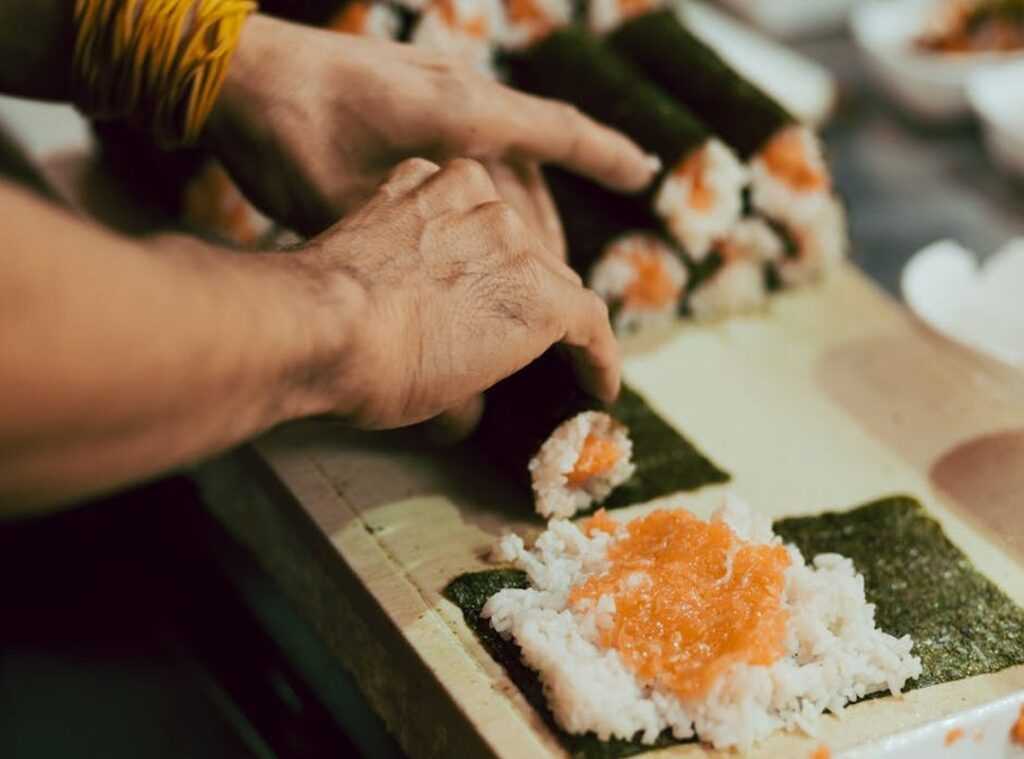
First up, the classic thin roll, or Hosomaki. It sounds fancy, but it’s straightforward. Place your nori, shiny side down (you don’t want to mess this up).
Spread a thin layer of rice, leaving a border at the top. Why? Because you need room to seal the deal.
Add a single filling like cucumber or tuna in the center. Roll it tightly with the makisu. Don’t be shy.
Use a grain of rice or a dab of water to seal the edge.
Now, onto Nigiri, the purest form of sushi. It’s all about simplicity and precision. Form a small, oblong mound of rice in your hand.
Think of it as your canvas. Press a slice of fish gently on top. A tiny dab of wasabi acts as the glue.
This isn’t just about technique. It’s an art form.
Mistakes happen. Maybe the rice sticks everywhere but the nori. Or the roll falls apart mid-slice.
It’s okay. I learned the hard way too. That’s part of the process.
Each attempt sharpens your skills.
Pro tip: Keep a bowl of water handy. Wet hands make all the difference. You learn, you adjust, you get better.
That’s the beauty of sushi making. It’s hands-on, messy, and utterly rewarding.
Flavorful Finish: Accompaniments and Etiquette
Let’s talk about sushi basics. The supporting players (pickled) ginger, wasabi, and soy sauce (are) just as key as the sushi itself. Pickled ginger (gari) is your palate cleanser, resetting your taste buds between bites.
Wasabi? It’s there for a pungent kick that wakes up your senses. And soy sauce adds that savory, umami punch.
But here’s a pro tip: dip the fish side of your nigiri into the soy sauce, not the rice. Why? It keeps the rice from falling apart and getting too salty.
Small details, big difference in taste. Who knew etiquette could taste so good?
Sushi Starts Here
Mastering sushi isn’t about the gimmicks. It’s about nailing the sushi basics. Perfect rice, fresh fish, and technique are your new allies.
Remember the frustration of failed attempts? Now you’re armed with what you need for success. Ready to dive in?
Choose your first fish, prep that shari, and let’s roll. Don’t just read about it. Do it.
Share your creations, show off your skills. There’s no better time to start than right now. You’re ready.
Start your sushi-making journey today.
 Kitchen Operations & Food Preparation Specialist
There is a specific skill involved in explaining something clearly — one that is completely separate from actually knowing the subject. Luther Deckeroids has both. They has spent years working with corner culinary techniques in a hands-on capacity, and an equal amount of time figuring out how to translate that experience into writing that people with different backgrounds can actually absorb and use.
Luther tends to approach complex subjects — Corner Culinary Techniques, Fresh Insights, Explore More being good examples — by starting with what the reader already knows, then building outward from there rather than dropping them in the deep end. It sounds like a small thing. In practice it makes a significant difference in whether someone finishes the article or abandons it halfway through. They is also good at knowing when to stop — a surprisingly underrated skill. Some writers bury useful information under so many caveats and qualifications that the point disappears. Luther knows where the point is and gets there without too many detours.
The practical effect of all this is that people who read Luther's work tend to come away actually capable of doing something with it. Not just vaguely informed — actually capable. For a writer working in corner culinary techniques, that is probably the best possible outcome, and it's the standard Luther holds they's own work to.
Kitchen Operations & Food Preparation Specialist
There is a specific skill involved in explaining something clearly — one that is completely separate from actually knowing the subject. Luther Deckeroids has both. They has spent years working with corner culinary techniques in a hands-on capacity, and an equal amount of time figuring out how to translate that experience into writing that people with different backgrounds can actually absorb and use.
Luther tends to approach complex subjects — Corner Culinary Techniques, Fresh Insights, Explore More being good examples — by starting with what the reader already knows, then building outward from there rather than dropping them in the deep end. It sounds like a small thing. In practice it makes a significant difference in whether someone finishes the article or abandons it halfway through. They is also good at knowing when to stop — a surprisingly underrated skill. Some writers bury useful information under so many caveats and qualifications that the point disappears. Luther knows where the point is and gets there without too many detours.
The practical effect of all this is that people who read Luther's work tend to come away actually capable of doing something with it. Not just vaguely informed — actually capable. For a writer working in corner culinary techniques, that is probably the best possible outcome, and it's the standard Luther holds they's own work to.