Ever felt like diving into the world of Indian cooking techniques but didn’t know where to start? You’re not alone. It’s not just about throwing spices into a pot and hoping for the best.
Trust me, there’s an art to it. I’ve spent years experimenting in my kitchen, trying to capture those flavors that make you stop and savor every bite.
Why does it matter? Because once you get the hang of it, you can whip up meals that are delicious but also deeply satisfying. You’ll learn how to use spices like cardamom, turmeric, and cumin to create layers of flavor that sing together.
And it’s not just about spices. Technique is everything. From tempering to slow-cooking, each method unlocks a different layer of taste.
Stick with me, and we’ll break down the secrets of these techniques. By the end, you’ll have the confidence to recreate those authentic, mouthwatering dishes right in your own kitchen.
Bhunao: The Heartbeat of Flavor
“Bhunao” is the soul of Indian cooking techniques. It’s not just a method; it’s an art. You slowly sauté aromatics like onions, ginger, and garlic in fat.
This isn’t a quick fry. It’s a patient simmer that builds a rich, deep flavor base. Ever wondered why your curry doesn’t taste as intense?
It’s probably the Bhunao.
The science is simple yet fascinating. The process caramelizes natural sugars, coaxing out fat-soluble flavors from the spices. Imagine the raw onion’s sharpness mellowing into sweetness.
The air fills with the nutty aroma of toasted cumin. It’s an experience, really. And yes, it takes time.
But the result? A complex “masala” that forms the backbone of dishes like Rogan Josh or Butter Chicken.
Now, here’s a pro tip: patience is key. Seriously, don’t rush this. Cook the masala until you see the oil separate from the mixture.
That’s your cue. The flavors are ready, fully developed. Trust me, once you nail this, your curry game changes.
Want to dive deeper into culinary wonders? Check out understanding sushi beyond basics. Different cuisine, same concept: mastery of technique.
So next time you’re in the kitchen, remember that Bhunao is your best friend. Let it lead the way to flavor nirvana.
Dum Pukht: The Magic of Slow-Cooking with Steam
Ever heard of Dum Pukht? It’s an ancient Indian cooking technique that’s all about patience and magic. “Dum” means “to breathe in,” and “Pukht” means “to cook.” This isn’t your average cooking method. It’s about sealing flavors in a pot and letting them mingle on a low flame.
Picture this: food in a heavy-bottomed pot, sealed with dough, simmering away.
The flavors? Unbelievable. All the steam and aromas are trapped inside, forcing ingredients to cook in their own juices.
Meat becomes tender. Flavors become deeply infused and subtle. Think of a world-renowned Biryani or a delicate Korma.
You know, those dishes where the aroma hits you before the taste does.
And hey, you don’t need to be a professional chef to try Dum Pukht at home. Use a Dutch oven with a tight-fitting lid. Here’s a pro tip: for a better seal, place a layer of aluminum foil under the lid.
Cook in a low-temperature oven (around 275°F / 135°C) and let it work its magic.
Why bother with slow cooking? Because the reward is in the taste. Indian cooking techniques like this one aren’t just about food.
They’re about an experience. It’s a bit of history on your plate, a moment suspended in time, and yes, it’s worth the wait.
Tandoor & Tawa: Sizzling Secrets of High-Heat Cooking
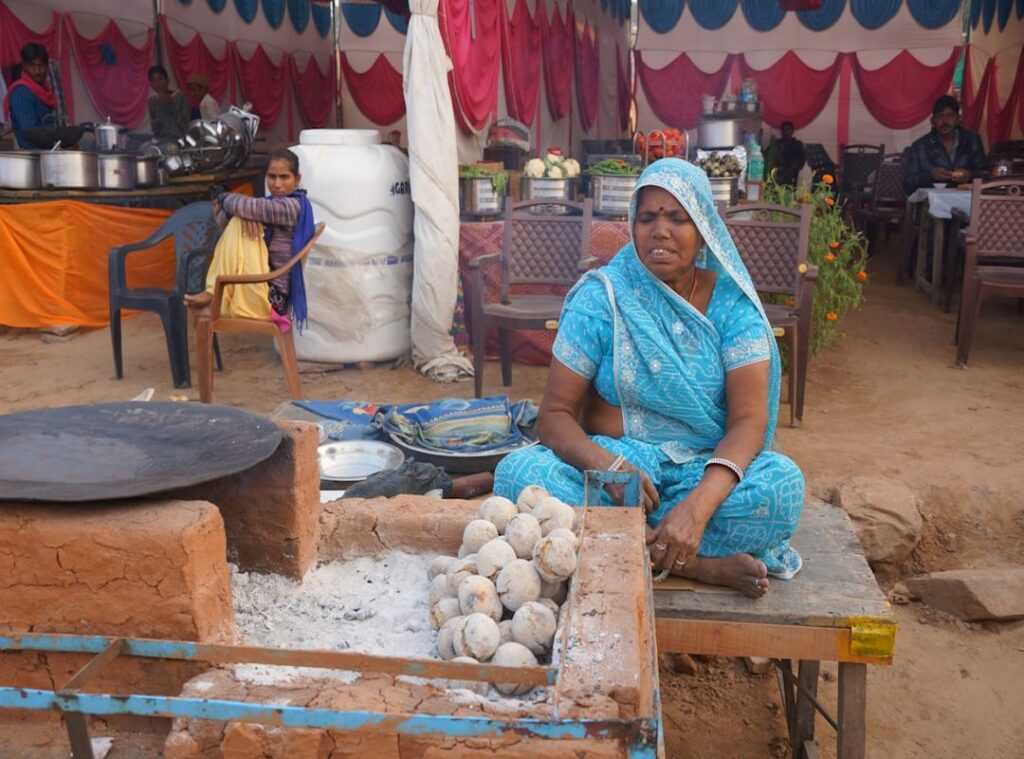
When it comes to high-heat Indian cooking techniques, the Tandoor and Tawa are the undisputed champions. The Tandoor, a cylindrical clay or metal oven, is one of those culinary marvels that just gets it right. Inside, charcoal burns fiercely, creating radiant heat.
This intense environment cooks food rapidly and imparts that signature smoky char. Think Tandoori Chicken or Seekh Kebabs. Ever wonder why naan tastes so good?
It sticks to the Tandoor’s hot walls, cooking to perfection.
Now, let’s talk about the Tawa. It’s the stovetop hero of Indian kitchens. Picture a flat or concave griddle that delivers quick sears like a boss.
It’s made for those dishes that need rapid, direct heat. Dosas, parathas, and a quick stir-fry of paneer (Tawa Fry) are all born here. You want to get the perfect sear?
Here’s the truth: not everyone has a Tandoor at home. But don’t fret. You can mimic it by cranking your oven to the highest setting or using a broiler.
A well-seasoned cast-iron skillet can be your modern Tawa.
Place marinated goodies on a wire rack over a baking sheet. Voilà, instant Tandoor effect.
Pro tip: If you’re into exploring other global cuisines, check out this mexican cuisine flavorful adventure for some mouthwatering takeaways.
The Tandoor and Tawa aren’t just about tradition. They’re practical, solid, and important in any kitchen. You’ll see why these techniques have stood the test of time.
Ready to fire up your kitchen? Let’s get cooking!
Tadka/Tarka: The Final Flourish of Flavor
Ah, the magic of Tadka. If you’ve ever been seduced by the aroma of Indian cooking, you’ve experienced it. Tadka (or Tarka, as some say) is more than just a spice mix.

It’s a technique that transforms a dish from good to unforgettable. Picture this: whole or ground spices roasted in hot oil or ghee. The moment that sizzling, aromatic oil hits your dish, you’ll hear mustard seeds pop like tiny fireworks, releasing a fragrant cloud that’s nothing short of heavenly.
Why is it so key, you ask? This isn’t just a garnish. It’s an explosive layer of flavor and aroma that captivates your senses.
The process of “blooming” is fascinating. When spices hit the hot fat, their important oils burst forth. The flavors become deeper, more intense.
Far better than if you’d just mixed them in.
Consider classics like dal and raita. Without Tadka, they’d lack that final flourish. But here’s the thing: it’s fast.
You need a dedicated pan (a tadka pan works wonders) and be prepared. Spices can burn in seconds, so timing is key.
If you’re diving into indian cooking techniques, don’t overlook this step. Trust me; it’s the difference between good and extraordinary. Why settle for less when your taste buds can dance?
Preservation & Fermentation: The Heart of South Indian Flavors
Indian cooking techniques aren’t just about throwing spices on a hot pan. Nope. There’s a world of flavor that builds over time, like the fermentation magic in South Indian dishes.
Take Idli and Dosa, for example. You mix rice and lentils, let them sit, and voilà! They ferment, gaining a unique tang and a lightness that’s easier on your belly.
Now that’s something you can’t rush with a flame.
And then there’s Achaar. It’s not just a sidekick. A true powerhouse!
This pickling technique combines fruits and veggies with salt, spices, and oil for that kick of pungency and spice. Ever had a meal that felt flat? A spoonful of Achaar can change everything.
Fermentation and preservation aren’t just techniques. They’re an art form. They transform dishes into complex, layered experiences.
More than just quick heat. They’re the soul of Indian cuisine. Important.
Don’t you think?
Spice Up Your Kitchen
The secret to authentic Indian food isn’t just ingredients. It’s in mastering Indian cooking techniques. You know you crave those deep flavors, right?
Start simple. Pick one technique and try it at home. Transform your meals into a feast.
Visit tbfoodcorner.com for more inspiration. Sizzle up your kitchen today.
 Kitchen Operations & Food Preparation Specialist
There is a specific skill involved in explaining something clearly — one that is completely separate from actually knowing the subject. Luther Deckeroids has both. They has spent years working with corner culinary techniques in a hands-on capacity, and an equal amount of time figuring out how to translate that experience into writing that people with different backgrounds can actually absorb and use.
Luther tends to approach complex subjects — Corner Culinary Techniques, Fresh Insights, Explore More being good examples — by starting with what the reader already knows, then building outward from there rather than dropping them in the deep end. It sounds like a small thing. In practice it makes a significant difference in whether someone finishes the article or abandons it halfway through. They is also good at knowing when to stop — a surprisingly underrated skill. Some writers bury useful information under so many caveats and qualifications that the point disappears. Luther knows where the point is and gets there without too many detours.
The practical effect of all this is that people who read Luther's work tend to come away actually capable of doing something with it. Not just vaguely informed — actually capable. For a writer working in corner culinary techniques, that is probably the best possible outcome, and it's the standard Luther holds they's own work to.
Kitchen Operations & Food Preparation Specialist
There is a specific skill involved in explaining something clearly — one that is completely separate from actually knowing the subject. Luther Deckeroids has both. They has spent years working with corner culinary techniques in a hands-on capacity, and an equal amount of time figuring out how to translate that experience into writing that people with different backgrounds can actually absorb and use.
Luther tends to approach complex subjects — Corner Culinary Techniques, Fresh Insights, Explore More being good examples — by starting with what the reader already knows, then building outward from there rather than dropping them in the deep end. It sounds like a small thing. In practice it makes a significant difference in whether someone finishes the article or abandons it halfway through. They is also good at knowing when to stop — a surprisingly underrated skill. Some writers bury useful information under so many caveats and qualifications that the point disappears. Luther knows where the point is and gets there without too many detours.
The practical effect of all this is that people who read Luther's work tend to come away actually capable of doing something with it. Not just vaguely informed — actually capable. For a writer working in corner culinary techniques, that is probably the best possible outcome, and it's the standard Luther holds they's own work to.