Ever tried making a stir-fry at home only to end up with something more like a steamed veggie medley? Frustrating, right? I’ve been there too.
Many times. But after years of culinary trial and error, I’ve cracked the code on turning that soggy mess into a sizzling masterpiece.
This article is all about getting you those restaurant-quality results. We’ll break down everything from the right heat (yes, it matters) to timing and flavor layering. It’s not just a recipe.
It’s a deep dive into the art of the stir-fry.
You’ll get actionable stir-fry tips tricks that make all the difference. Once you understand the ‘why’ behind the ‘how,’ you’ll open up your stir-fry potential. Ready to transform your kitchen game?
Let’s get started.
Before the Fire: Why ‘Mise en Place’ is Your Secret Weapon
You’re about to dive into stir-frying. It’s fast, it’s furious, and it demands precision. You’ve got to get everything ready before the heat is on.
That’s why “mise en place” (everything in its place) is not just fancy chef talk. It’s your secret weapon.
Imagine you’re a pilot. You wouldn’t skip the pre-flight checklist, right? Same with cooking.
Prepping your ingredients is non-negotiable. Veggies need to be uniform. You can’t just hack away at them.
Try bias cutting your carrots and celery. It increases the surface area, which means more flavor and faster cooking.
What about proteins? Slice them thinly against the grain. Trust me, it makes them tender.
Use a simple marinade. Soy sauce, cornstarch, and a bit of oil work wonders. It flavors and protects your protein from high heat.
Don’t forget about your sauce. Mix it beforehand. You don’t want to scramble for flavors while your stir-fry burns.
Mince those aromatics. Garlic, ginger, scallions. Keep them in small bowls.
They have to hit the pan first, not after the chaos begins.
Want more on the fine art of cutting? Check out these knife skills every cook should master.
The magic’s in the prep. Skip it, and you’re in for a mess. Stir-frying isn’t the time to wing it.
No time for a leisurely pace. Everything must be ready before the fire starts. Prep well, and you’ve got a fighting chance.
Harnessing the Heat: The Sizzle and the Science
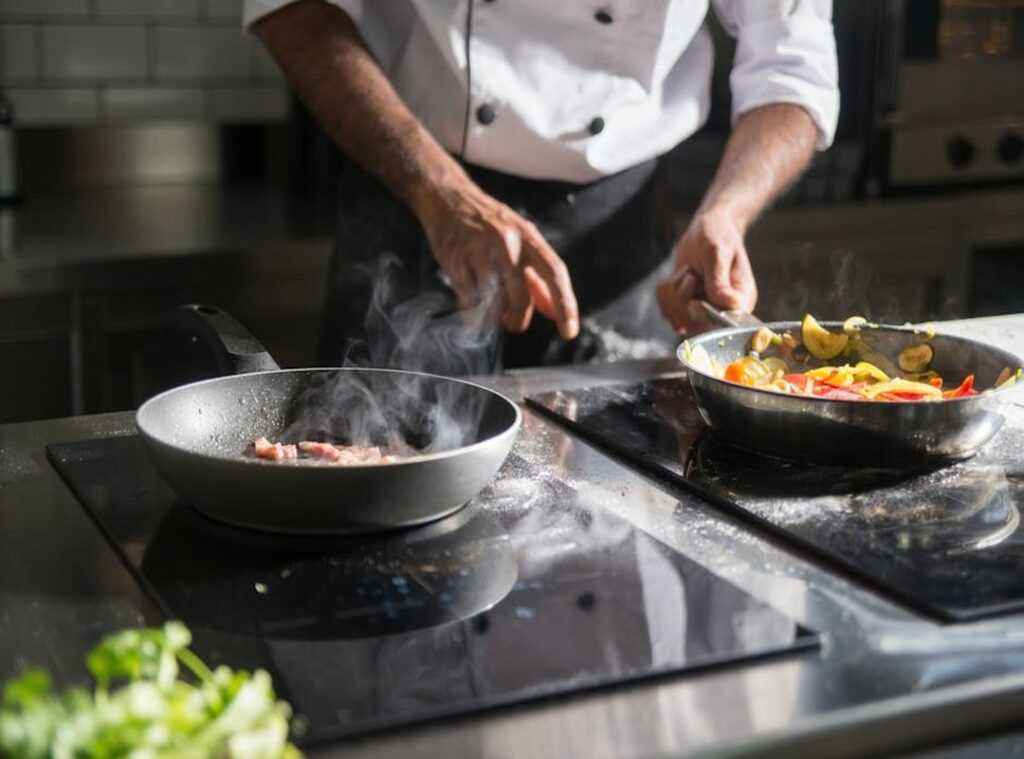
Let’s talk heat. If you’re aiming for that perfect stir-fry, high, shimmering heat is non-negotiable. It’s what gives those veggies a crisp edge and prevents them from steaming into a soggy mess.
Ever tried using a lukewarm wok? Forget it. You’re better off with a very hot skillet.
A skillet, on the other hand, keeps the heat steady, especially for us mere mortals without a restaurant-grade setup.
Now, about cookware. A carbon steel wok is traditional, sure, but a large, flat-bottomed skillet or sauté pan can work wonders in a home kitchen. Woks are great for quick heat transfer, but if your stovetop doesn’t get hot enough, it’s just a fancy bowl.
Ever heard of ‘wok hei’? It’s that hard to find smoky flavor, the ‘breath of the wok.’ Achieving it at home isn’t easy, but not impossible. The trick is not overcrowding the pan.
Let your ingredients sear in peace. Resist the urge to stir constantly.
Oils matter too. High-smoke-point oils like avocado, peanut, or grapeseed are your best friends here. Butter and extra virgin olive oil?
Save them for something else. They just can’t handle the heat needed for a proper stir-fry.
Want to make amazing stir fries every time? Keep these stir-fry tips tricks in mind and don’t compromise on the heat. It’s the difference between a dish that’s just okay and one that’s unforgettable.
Crafting a Flavor Symphony: Beyond Just Soy Sauce
Let’s talk about taking your stir-fry from boring to bold. You know what’s basic? Just drenching everything in soy sauce.
Sure, it’s good, but you’re here for more. the “holy trinity” of Chinese cooking comes in: ginger, garlic, and scallions. Add them after the initial sear but before the sauce. Why?
Because burned garlic is a crime against flavor. Get them golden and fragrant, then hit them with the sauce. This timing is everything.
Now, if you haven’t tried velveting your meat, you’re missing out. It’s a game-changer. Toss your sliced chicken or pork in egg white, cornstarch, and a splash of rice wine.
Trust me, it creates this magical barrier that keeps your meat juicy. You want tender chicken? That’s how you do it.
And let’s not get stuck in the soy sauce rut. You need a customizable stir-fry sauce formula. It’s like a playlist for your taste buds.
Think salty with soy or tamari, sweet with honey or mirin, and throw in some acid like rice vinegar or lime juice. Don’t forget umami (oyster) sauce or miso paste works wonders. Finish it with a thickener like a cornstarch slurry.
Mix and match, my friend.
Now, don’t be afraid to experiment. Add a dash of sesame oil at the end for an aromatic lift or a spoonful of chili garlic sauce for some heat. You never know what flavor combo will become your go-to.
Cooking is creative. It’s about finding what works for you. For more inspiration, check out this guide.
It’s all about expanding your culinary skill set beyond the classic stir-fry tips tricks. What are you waiting for? Get in the kitchen and start playing with flavors.
The Art of the Toss: A Step-by-Step Guide to Perfect Timing
Let’s tackle the age-old issue of soggy vegetables and overcooked meat. You know you’re guilty of it. It’s all about the timing and order of operations.
First, superheat that pan and oil. Don’t just warm it. Make it sizzle.
Your protein needs a hot surface to sear properly.
Next, sear the protein in a single layer. Crowding the pan? Big mistake.
It steams instead of searing. Get some color on that meat, then remove it. This step is key because it builds flavor without overcooking.
Then, hit the pan with hard vegetables like broccoli or carrots. They need a head start. Stir-fry them for a few minutes to soften.
Once they’re on their way, toss in the softer vegetables. Bell peppers and snow peas cook faster, so they come later.
Now, aromatics. Garlic, ginger, whatever smells divine, goes in next. Thirty seconds is all you need to open up their flavors.
Finally, return the protein to the pan. Add your pre-mixed sauce (don’t wing it last minute) and toss everything to combine. This keeps the protein juicy and your veggies crisp-tender.
Cooking in batches prevents overcrowding, ensuring every ingredient shines. That’s your stir-fry tips tricks in action. Perfect timing isn’t just a skill.
It’s an art. And it’s what separates a decent dish from a masterpiece.
Stir-Fry Mastery at Your Fingertips
Banish bland stir-fries forever. You’ve got the stir-fry tips tricks to transform your kitchen game. Meticulous prep, high heat mastery, and flavor complexity (you) know what to do.
You’ve learned to respect the cooking sequence. It’s time to go beyond recipes and make your signature dish.
Why settle for soggy when you can create something memorable? Pick a new technique. Velvet your chicken.
Build a sauce from scratch. Choose any and make your next stir-fry the best one yet.
Hungry for more guidance? Dive into tbfoodcorner.com for fresh takeaways that’ll keep you sizzling.
 Head of Culinary Content & Recipe Development
There is a specific skill involved in explaining something clearly — one that is completely separate from actually knowing the subject. Max Bessleroid has both. They has spent years working with flavorful cooking foundations in a hands-on capacity, and an equal amount of time figuring out how to translate that experience into writing that people with different backgrounds can actually absorb and use.
Max tends to approach complex subjects — Flavorful Cooking Foundations, Explore More, Kitchen Prep Hacks being good examples — by starting with what the reader already knows, then building outward from there rather than dropping them in the deep end. It sounds like a small thing. In practice it makes a significant difference in whether someone finishes the article or abandons it halfway through. They is also good at knowing when to stop — a surprisingly underrated skill. Some writers bury useful information under so many caveats and qualifications that the point disappears. Max knows where the point is and gets there without too many detours.
The practical effect of all this is that people who read Max's work tend to come away actually capable of doing something with it. Not just vaguely informed — actually capable. For a writer working in flavorful cooking foundations, that is probably the best possible outcome, and it's the standard Max holds they's own work to.
Head of Culinary Content & Recipe Development
There is a specific skill involved in explaining something clearly — one that is completely separate from actually knowing the subject. Max Bessleroid has both. They has spent years working with flavorful cooking foundations in a hands-on capacity, and an equal amount of time figuring out how to translate that experience into writing that people with different backgrounds can actually absorb and use.
Max tends to approach complex subjects — Flavorful Cooking Foundations, Explore More, Kitchen Prep Hacks being good examples — by starting with what the reader already knows, then building outward from there rather than dropping them in the deep end. It sounds like a small thing. In practice it makes a significant difference in whether someone finishes the article or abandons it halfway through. They is also good at knowing when to stop — a surprisingly underrated skill. Some writers bury useful information under so many caveats and qualifications that the point disappears. Max knows where the point is and gets there without too many detours.
The practical effect of all this is that people who read Max's work tend to come away actually capable of doing something with it. Not just vaguely informed — actually capable. For a writer working in flavorful cooking foundations, that is probably the best possible outcome, and it's the standard Max holds they's own work to.